Monday, September 20, 2010

Oktoberfest

Today is the start of Oktoberfest! This will be the 200th year it is celebrated!

What exactly is Oktoberfest? To begin with, THE original, authentic Oktoberfest it is a 16 day celebration in Munich, Germany that occurs mostly in September and usually ends on the first Sunday in October. The initial purpose was to celebrate the marriage of Crown Prince Ludwig (who later became King Ludwig I) of Bavaria and actually did occur in October. The celebration was later moved to mid September in order to take advantage of the usually nicer weather in Germany at that time of the year and perhaps more importantly because most people are no longer farmers who need the valuable September weeks for harvesting their goods.

While many of us relate large quantities of beer with Oktoberfest, there are also many types of food associated with the festival. I admit I am a little biased to the culinary aspect for two main reasons. The first and obvious reason; I am a chef by profession and always enjoy trying new foods and then recreating the experience in the kitchen. The less obvious reason is that my wife, Margit grew up in Bavaria and always enjoys the tastes of home when I cook something from her childhood.

There are many types of food available in the vast beer halls of Munich during Oktoberfest. Choices range from Hendl (Chicken), Schweinsbraten (Roast Pork), Schweinshaxen (Pork Knuckle), Steckerlfisch (grilled fish, often mackarels on a stick), Würste (Sausages) to Sauerkraut, Blaukraut (Red Cabbage), Rettich (white radish), Knödeln (either Bread or Potato Dumpling) and Weisswurst (White sausage, usually eaten in the morning to cure “einen Kater” or hangover).

Besides the sausages, there is one staple food that stands out above the rest and that is the Bavarian Brezen or Pretzel. If you have never had the pleasure of eating a true Bavarian Pretzel, it is difficult to appreciate the differences between what is sold here in the States as a Pretzel and what is served in Bavaria. I suppose you may compare it with the difference between a bagel bought on the Lower East Side on Manhattan to a Bagel purchased at a supermarket


It was this Pretzel that I had searched for and attempted to recreate in the kitchen over the years with some decent facsimiles but all were lacking in the hard crunchy crust and soft inside associated with a true Brezen. My search was finally complete upon a trip to Germany last year with Margit. We had the opportunity to visit with Margit’s father and his wife Ursula. Ursula is about 90 years old and is sharp as a tack, we started talking about cooking and Pretzels and she gave me her recipe. I was excited to try it and couldn’t wait to get into the kitchen.

However, after my return home; my mood was dampened when I discovered that one of the key steps in preparing the pretzel prior to baking was dipping it in Lye. Yes, lye similar to what is in drain cleaner. Upon research I found that food grade lye is FDA approved and readily available over the Internet. Yes, I was able to continue my quest! If you are apprehensive about using lye in cooking (it is also used to make items such as hominy and the aforementioned bagel) you can substitute a baking soda bath prior to baking. The Brezen will not be quite the same, but almost. The recipe includes both options.

While these Brezen are delicious by the themselves or with some sweet mustard, to truly recreate the Oktoberfest Bier Garten experience try serving it with the traditional Bavarian cheese spread “Obatzda”.
This dish is not for those counting calories or are on a low fat diet as the two main ingredients are cheese and butter. It is however a delicious accompaniment to Bier and Brezen. There as as many versions of Obatzder in Bavaria as there are for chili in Texas. They all contain the same basic ingredients but with different variations. Some also include beer as an essential ingredient. I am partial to my wife’s family recipe and have included it as well.

The Bavarians have the word “Gemütlichkeit” that literally translates to coziness. However that is doing the word an injustice. The word has a much more abstract meaning. It actually is meant to convey a feeling of friendship, family and belonging. This is the feeling that one should have during Oktoberfest. So if you are enjoying a late summer day with friends and are having some Bier, Brezen and Obatzder then "Ein Prosit der Gemütlichkeit" or “a toast to good cheer”

Brezen

23 oz Bread Flour
4 oz Warm Milk approximately 110 deg
4 oz Warm Water approximately 110 deg
3 oz Unsalted Butter (Room Temperature)
1 pack Instant Yeast
1 Tbs Salt

Coarse (Kosher) Salt for sprinkling

Mix Yeast and Water
Add Butter, Salt and Milk to Flour
Add Water Mixture to Flour
Mix Flour mixture either by hand or in a stand mixture with dough hook until dough is formed. Approximately 10 minutes in mixer or until dough is elastic to touch.
Let dough stand for about one hour or until doubled.
Degas (punch down) Dough and cut into 12 pieces for large pretzels or 18 pieces for smaller Pretzels.

Roll out individual pieces into strands and twist to form pretzels.
Dip Pretzels into either Lye or Baking Soda Dip
Sprinkle with coarse salt

Place on greased baking sheet and bake for 20 -25 minutes at 375 deg until brown


For Lye Dip

1 oz Food Grade Lye
1 qt Water

Caution: If using Lye, you should wear goggles and gloves. Wash all surfaces after use and rinse any skin area that comes in contact with solution. Be sure to add the lye to the water as adding the water to the lye may cause a chemical reaction. DO NOT BOIL WATER

Drop two pretzels at a time in dip and remove with tongs. Avoid touching lye solution with hands,

Baking Soda Dip

½ cup Baking Soda
2 Qts Water

Boil Water and Baking Soda, Drop 2 pretzels at a time into water mixture and remove with slotted spoon. Place on paper towels to drain

Obatzda

14 Oz Ripe Camembert cheese (45-60%) Room temperature
3 Tbs Heavy Cream
2 oz unsalted butter Room temperature
1 med onion finely chopped
1-2 tsp sweet paprika
salt tt
pepper tt

Chopped Chives for garnish

Cut Camembert cheese into small cubes
Cut Butter into cubes
Mix Butter and Cheese together. Using a fork, be sure to break larger pieces down until all is blended
Fold in Onions, mix well
Mix in paprika
Add Salt and Pepper to taste

Cover and refrigerate for at least 30 minutes up to overnight. Garnish with chopped chives and pretzel sticks. Serve with Bavarian Pretzels or rye bread


Note You may substitute Brie for the Camembert or add 2-3 Tbs of beer for additional flavor


Saturday, September 11, 2010

Salmonella and the Egg Lady


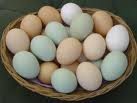
The recent outbreak of salmonella in the egg industry has caused me to reflect on cage-free vs. caged chicken eggs. For years I never gave it a thought and almost always bought “regular” eggs at the supermarket. After all, they are about half the price of cage-free eggs and they are after all just eggs right? Well after I met my wife Margit, she convinced me there was indeed a difference and that the battery caged hens were grossly mistreated and we should support the farmers that were more humane and sold "happy eggs". At first I went along because we were dating and I wanted to make brownie points, but after awhile I read up on caged hens on was appalled on how the hens were treated and the filth that surrounded the egg industry. While it is not my attempt to convince my readers to switch over to cage-free, I do suggest that you read some articles about the egg industry such as Humane Society Facts

As far as the Salmonella outbreak, it was traced back to two huge chicken farms that share the same facility. The Salmonella had origins in piles of feces and cross contamination from rodents causing the chickens to become infected, which in turn was passed to the eggs during formation. The contamination entered the eggs and went out to the end consumer.

Would cage-free eggs have prevented this outbreak?
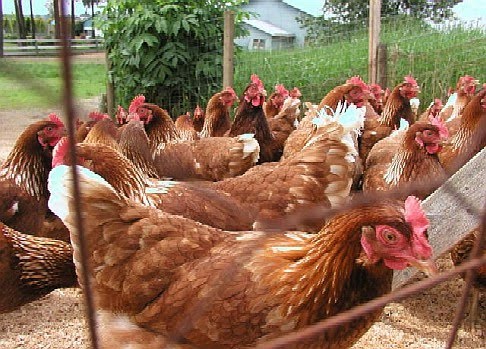
Yes and no. The definition of cage-free is vague and does not necessarily imply free range eggs. In fact there is currently no legal definition of Cage Free or Free Range Eggs. The fact is that both types are much better then the battery caged egg system where a hen has about 57 square inches of living space, less then the size then a standard piece of paper. This lack of definition still allows vast quantities of hens to be housed together under the same conditions exist that may cause an outbreak.

Free-range however, means inherently smaller farms as well as less chance of mass contamination. I suggest that you go for free-range eggs, organic if you can. That is of course if you do not have a local Egg Lady

The Egg Lady
I first me the Egg Lady last year while I was attending the Maynard Farmer’s Market, She was selling farm fresh eggs for $3.00 a dozen and I thought it would be a great opportunity to enjoy local food at a reasonable price. Well, I was quite disappointed to find out that she was out of eggs. She did say that I could stop by her house later that afternoon since her “girls” would have some ready later that day.

She gave me her card and was glad to see that she lived less then a mile from me. (for those who are not familiar with Maynard MOST things are less then a mile from me). I did buy a dozen eggs later that afternoon and cooked eggs the next morning for breakfast and yes, there was a significant difference in color, taste and overall enjoyment of simple eggs over easy.

We have been back many time since, I have even had to wait sometimes for the Egg Lady or her husband (the Egg Man?) to go out to the roost and gather some eggs. It is a little disconcerting to have eggs that are still warm handed over to you, but that is indeed Mother Nature at her most natural state.

I do admit that there are still times when I do buy caged white eggs; for instance: Easter Egg coloring, processed egg beaters or pasteurized liquid eggs for large volume cooking. However, for normal day to day family eating, I will continue to go to the Egg Lady and when she finally retires I will try to find her predecessor and if I move to the city? Well free range organic eggs it will be.

Hope you enjoy the fall season that is around the corner. I am looking forward to the variety of interesting fruits and vegetables that will be available for cooking and eating.

Sunday, August 22, 2010

The Duke of Mirepoix


Hello Fellow Foodies,

Well the last time we talked, I mentioned intrigue, food origins and French Royalty. What I did not mention was Carrots. Onions and Celery. Now what do all these items have in common? Ok, time’s up. I am talking of course about mirepoix.

Some of you may already know that mirepoix is a blend of aromatic vegetables that is the basis of many sauces and most stocks. To be precise it is a combination of 50% onions, 25% carrots and 25% celery, usually sautéed in butter but sometimes just added to stocks to bring out flavor. The onions provide a savory base, the carrots provide a sweetness and the celery brings it all together with its earthy background. The combination of these aromatics help enhance the simple goodness of many meat and vegetables.

You may now be thinking what the heck does this have to do with intrigue and French Royalty? Okay, the food origins may be a little obvious by now so we will leave that alone. The connection to royalty is that the person credited with documenting this blissful blend was the chef de cuisine for the Duke of Mirepoix in 18th century France. Although, contrary to popular belief, the French did not invent gourmet dining, they are generally credited to be the driving culture behind the documentation of fine dining and cooking. The Chef of Mirepoix was therefore the first person to document this use and expounded on its versatility.

The intrigue? Well according to According to Pierre Larousse (quoted in the Oxford Companion to Food), the Duke of Mirepoix was "an incompetent and mediocre individual. who owed his vast fortune to the affection Louis XV felt toward his wife and who had but one claim to fame: he gave his name to a sauce

One can only wonder what a demi-glace, or beef stock would taste like if Louis XV instead was attracted to the wife of the “Earl of Sandwich”, imagine a sauce where the main ingredients were bread and meat?

So the next time you taste an onion, carrot or celery, savor the individual taste of what it is. Perhaps even try all three at one time and appreciate “melange” for what it is, and then thank Charles-Pierre-Gaston François de Lévis, duc de Lévis-Mirepoix aka the Duke of Mirepoix. Or better yet, thank his wife and his cook.

Enjoy the remaining days of summer and have a great week.

If you enjoy reading my blog, please leave a comment on Blogger or better yet, sent it to one or two friends.

Thanks,

Chef Rob

Wednesday, July 28, 2010

Crepes "s'il vous plait,"

The other day I was working a brunch where we had a crepe station set up. While I was standing behind the burner in the 90 deg heat and humidity, I was day dreaming about crepes and when I ate them on streets of Paris. The last one I had there was when I went with my kids to Europe for my 40th birthday, the kids had nutella and chocolate crepes, and I had a more adult blend. I know I had a Grand Marnier crepe and maybe also a Jack Daniels crepe. You have to love the Parisians! These were served from a sidewalk vendor, no Sabrett’s and Knishes here.

My reverie and daydreams were broken when a guest asked me; what's the difference between a crepe and a blintz? I had to think for a second and then answered that the main difference is that a blintz is filled with a cheese filling and rolled before serving.

I guess the answer was sufficient since the guest just moved down the line and continued to fill his crepes; one with the savory vegetable blend with Mornay sauce and the second filled with a fresh fruit compote topped with raspberry coulis and fresh whipped cream.

As he glided down the line, I started to think about other breakfast items similar to crepes. The obvious first thought was pancakes, while they are much thicker then crepes they are very similar with many of the same ingredients.

I then thought of tortillas and the how they are also a staple breakfast item in many cultures. The best huevos rancheros I ever had was not in Mexico but in a little dive in Los Angeles. The tortillas were cooked on a cast iron frying pan older then the gray haired Grandmother cooking them, and the salsa was spicy and hot but not over powering.

In many cultures, pancakes are not always for breakfast. How does Chinese pancakes with green onions sound? Or maybe pancakes with crispy Peking duck? Germans also have pancakes for dinner, they are not served with maple syrup but with filling ranging from jams and jellies to sprouts.


That being said, that the next time you have a meal that is not part of your normal routine, even if its something as simple as crepes, let you mind drift and take a trip around the world. Who knows where you may end up?

Sunday, July 11, 2010

Mis en place


Mis en place, does that mean anything to you? Well if you have taken basic French 101 you may know it literally means “to put in place”, but in the cooking world it means “everything in place”. This is one of the most basic, yet perhaps most important trick of the trade when it comes to being a successful cook. What it actually means in laymen’s terms is to get everything ready. If you have ever watched a cooking show on TV or demonstration, you have seen this in action and may not have even known it.

What a successful cook does before starting a recipe is measure all ingredients out after reading the recipe through, and have them lined up and ready when needed. This not only allows the recipe to be created in a seamless fashion, but it also allows you to make sure that you have everything required in the recipe. Have you ever had the unfortunate experience of baking or cooking what should be a wonderful dish, only to get towards the end of the recipe to discover that you have baking soda but not the baking powder required or the curry you thought you had turned out to be mustard or cumin? Sure they may look alike but you can not substitute them in recipes. If you are lucky enough to live close to a store you can run out or better yet send your significant other; but depending on what you are making, there may not be time to do this. If you had set your Mis en place, you would have found this out ahead of time you are missing something and been able to avoid the mishap This will also help you do your slicing and dicing ahead of time if the recipe calls for it.

So next time you take a venture into the kitchen, whether for a new or old time favorite recipe try using this technique. You’ll find this will save you time and help reduce stress in the kitchen, just another trick in making life easier, five meals at a time. Or in this case only one meal. Have a great week and stay cool

Tuesday, June 29, 2010

Beer and food, two of my favorite things. I have to admit I did get a fair sampling of both over the weekend while down in NY. I had a chance to sample a few different styles of food including a great evening at a German Restaurant to help celebrate a friend’s birthday. I am a little biased about how German food should taste, the Jaeger Schnitzel (schnitzel with hunter’s sauce) was tasty, however it wasn’t as delicious as the one my wife makes. But that is to be expected since she’s from Germany and is a good cook.

What I did enjoy with that dinner besides the “Gemuetlichkeit” was the choice of beers that were offered. I started out with a nice Warstiener Dunkel (dark) with the sausage appetizer and moved over to a lighter lager with the main course, dessert consisted of a round of Jaegermiester along with some Pear Schnapps (no Obstler was available, dang)

What does all this have to do with my cooking blog?]


Well it reminds me once again how beer and food are a great match. It has also made me start planning my beer and food dinner party menu. There are many wine pairings that are offered at restaurants and now some are now offering beer pairings as well. Its about time.


Although I do enjoy a nice glass of wine and can appreciate the subtle differences in the different vintages and varietals, the different types of beer now available make cooking and eating an enjoyment as well.

My plan is to offer a full dinner party with each course prepared with beer in the recipe as well as a recommended beer to accompany it. But the great part of this is that even if you are not adventurous and only drink a light beer from St. Louis, you can still enjoy the food and beer!

I am working on fall menus and expect to see the beer offering next month. However, one of the things I did promise to post for a friend is a delicious chocolate cake made with Stout beer. This can of course be the dessert served with a beer dinner, but it makes a delicious anytime cake or a St. Patrick’s Day dessert as well.

With this cake, they are two types of frosting that can be made, I prefer the chocolate ganache, however if you are looking for a for a beer presentation experience, then the cream cheese frosting does make it look a little like a glass of Guinness with foam.

Enjoy the food and the beer.


1 cup stout (such as Guinness)
1 cup (2 sticks) unsalted butter MAKE SURE YOU USE UNSALTED
3/4 cup Dutch-processed unsweetened cocoa powder
2 cups all purpose flour
2 cups sugar
1 1/2 teaspoons baking soda
1 1/2 teaspoon kosher salt
2 large eggs
2/3 cup sour cream
6 ounces good semisweet chocolate chips, I prefer Ghirardelli
½ cup heavy cream
3/4 teaspoon instant coffee granules

Cake

Preheat oven to 350°F. Butter or spray a bundt pan well with cake spray Bring 1 cup stout and 1 cup butter to simmer in heavy large saucepan over medium heat. Add cocoa powder and whisk until mixture is smooth. Cool slightly.
Drink remaining 4 oz of stout
Whisk flour, sugar, baking soda, and salt in large bowl to blend.
Using an electric mixer, beat eggs and sour cream in another large bowl to blend.
Add stout-chocolate mixture to egg mixture and beat just to combine. Add flour mixture and beat briefly on slow speed. Using rubber spatula, fold batter until completely combined. Pour batter into prepared pan. Bake cake until tester inserted into center comes out clean, about 35 minutes. Transfer cake to rack; cool completely in the pan, then turn cake out onto rack for drizzling ganache.

Ganache

For the ganache, melt the chocolate, heavy cream, and coffee in the top of a double boiler over simmering water until smooth and warm, stirring occasionally. Drizzle over the top of cooled cake You may use microwave as well, just be careful to heat in 10-15 sec stages. You may also substitute a shot of Kahlua for the coffee.

Sunday, June 13, 2010

Its been a busy few weeks, between Park Hill Chefs and my side job at a catering company its been hectic, But, hectic is good, June is a busy month with graduations and end of school year ceremonies and it helps build a little nest egg during the lean summer “cheffin” months.

During this time I plan on keeping busy by teaching a few ServSafe classes and doing some community education classes as well. Right now I have some healthy cooking classes scheduled and may add a few more.

Another activity that I will be undertaking this summer is undertaking a Chef Challenge, I have submitted my application and will post details when the first round is selected. Keep your fingers crossed that I am selected, I know I will.

As part of the challenge I have to submit an original recipe and I have until Tuesday to come up with one. I am torn between a nice Southwestern dish or one that is beer based. The beer based option is certainly one that I will pursue in the near future if I do not select it as I plan on offering a Beer Dinner party option in the near future, this will pair different types of beer with several courses cooked with beer. Please contact me for further information if you would like to book a dinner party or would just like some suggestions on pairings.

Otherwise, have a wonderful summer and stay hydrated during the hot summer months.